Diagnostic Tool for Cars: Target Users and Workshop Applications
Car repair today depends more on electronic systems than mechanical inspection. Many issues are stored inside control units and cannot be seen directly. A diagnostic tool for cars is used to access these systems, read fault information, and support repair decisions. Its use varies depending on the type of user and the working environment, especially between workshops and specialized service roles.
Professional workshop technicians
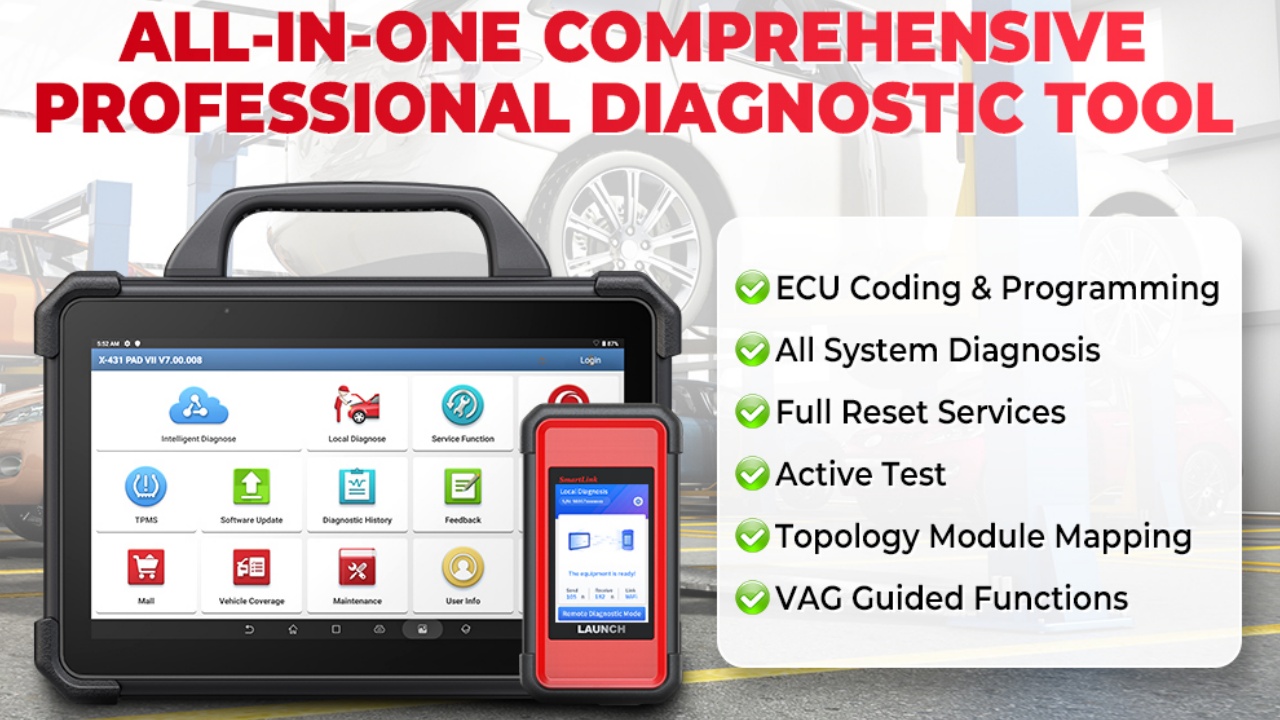
Diagnostic tools are used every day in repair workshops. Technicians use them to scan vehicle systems and to determine and verify fault conditions. Structured repair workflows are typically employed in such instances as the use of devices like the LAUNCH X431 PAD VII 7 ELITE that can support multiple vehicle systems simultaneously. In distribution channels managed by Lenkor, such tools are supplied with verified sourcing to support consistent use in workshop environments.
Electrical system specialists
Some techs specialize in just vehicle electrical systems and no other repairs. They cope with wiring problems, sensor failures, and control unit problems. Diagnostic tools help them trace signal paths and check whether components are communicating correctly. This type of work requires detailed system access rather than basic fault reading.
ECU and programming-focused users
A smaller group of users works directly with vehicle control units. Their tasks include updating or reconfiguring electronic modules after replacement. Tools used in this area must support structured communication with vehicle systems. Functions such as ECU coding and programming are commonly included in higher-end devices. In supply operations handled by Lenkor, product authenticity and after-sales support are emphasized to ensure proper tool usage in such sensitive tasks.
Fleet maintenance teams
Multiple vehicle companies use diagnostic tools to track the performance of multiple vehicles. These tools facilitate monitoring of the recurring problems and minimize undesirable failures. Instead of waiting for failures, preventive maintenance is carried out through diagnostic tests, enabling the group to plan its maintenance activities in advance. This leads to reduced downtime and greater vehicle availability.
Mobile repair technicians
Mobile technicians operate outside fixed workshops and often work at customer locations. Their tools must be easy to carry and quick to operate. They use diagnostic tools mainly for fault identification and basic system checks. When the problem is too complicated, the vehicle is then taken to a workshop for further examination.
Key programming specialists
Some users focus on vehicle security systems, including key registration and immobilizer functions. These tasks require diagnostic tools capable of accessing security-related modules. The process is sensitive because incorrect handling can affect vehicle access systems. Tools used in this area must follow specific manufacturer protocols.
Workshop repair flow integration
Many workshops not only use diagnostic tools but also employ them as part of a repair program. Usually, the steps taken include scanning, testing, repairing, and finally verifying. Such an arrangement goes a long way in ensuring that the faults are first diagnosed before any replacement of parts. It also cuts down on the unnecessary repair actions.
System verification after repair
After completion of the repair work, a diagnosis is conducted to determine whether any faults have been fixed. There is always the removal of fault codes and testing of the system’s stability. In case the fault persists, further analysis is done. This step helps to make sure repairs are properly done before the vehicle is returned.
Expansion use in advanced workshops
Some workshops offer additional modules to enhance users’ capabilities when using their diagnostic tools. These can include testing sensors, battery, or signal analysis. This can be achieved via external tools such as the LAUNCH X431 PAD VII 7 ELITE, which provide more detailed inspection as necessary.
Role of distribution and support systems
Access to diagnostic tools depends not only on the device itself but also on supply and support networks. Lenkor operates as a trading company focused on distributing original diagnostic equipment rather than modifying product functions. Its role includes overseas warehouse delivery and after-sales support, which help reduce delays and support workshops across different regions.
Conclusion
Diagnostic tools for cars are used by a wide range of users, from workshop technicians and electrical specialists to fleet managers and mobile repair workers. Each group uses the tools differently depending on work conditions and repair needs. Devices such as the LAUNCH X431 PAD VII 7 ELITE support a range of diagnostic tasks, from system checks to programming. Alongside the tools themselves, distribution and service structures like those provided by Lenkor help maintain product availability, support, and delivery consistency across global repair environments.